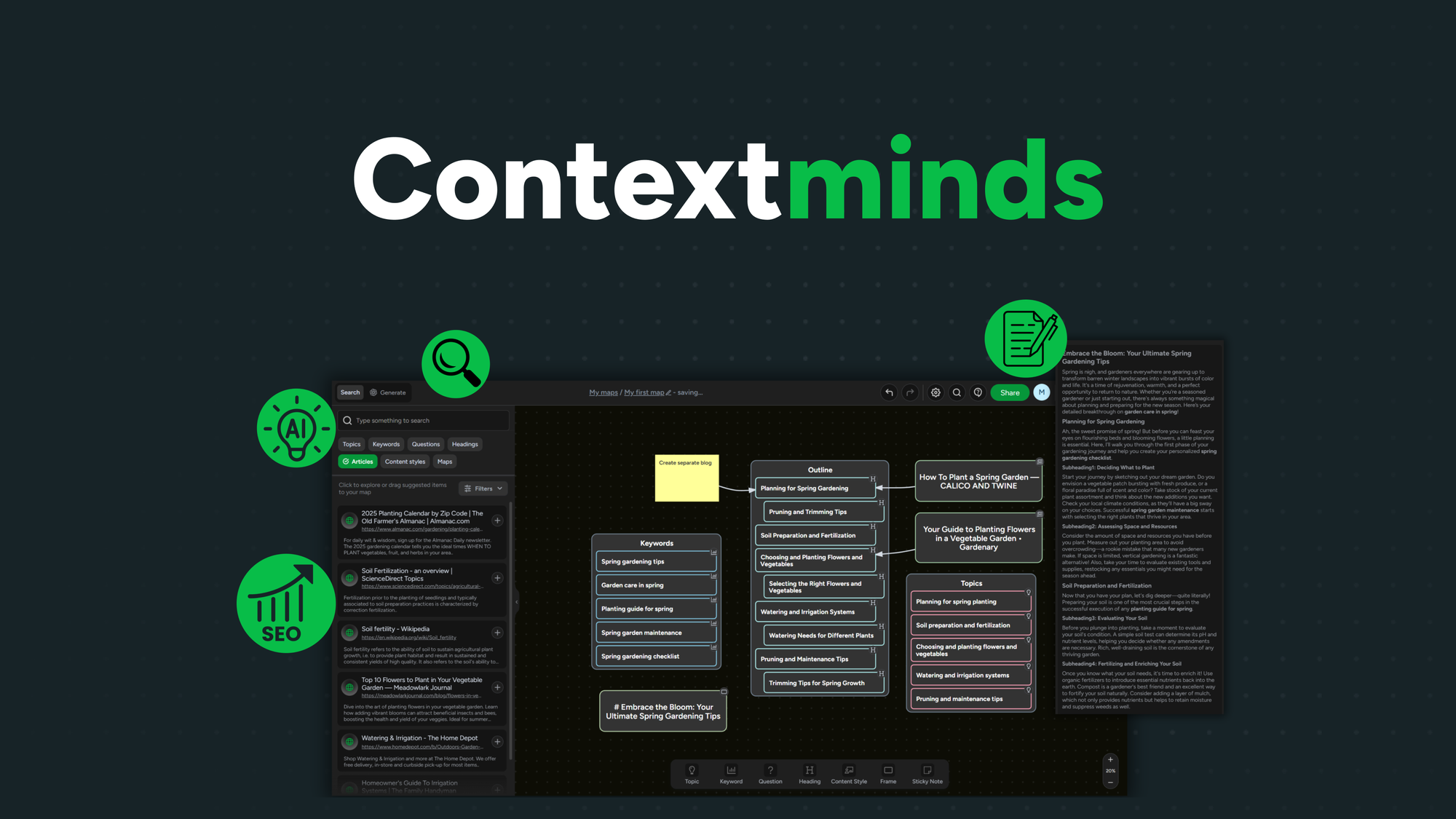
ContextMindsMarketing Sales Analysis
“Don't build another generic AI mind map. Build a 'Content Strategy Simulator' for specific industries.”
Worth Studying
Demand appears real and the incumbent looks vulnerable enough to justify deeper validation.
Worth Studying
Demand appears real and the incumbent looks vulnerable enough to justify deeper validation.
Medium-High
Based on revenue, reviews, strategy fit, and visible downside signals in the current dataset.
Demand exists, wedge unclear
This tells you how much of the current read is supported by strong in-platform evidence versus thin or ambiguous signal.
Confirm that premium pricing reflects real willingness to pay, not edge-case packaging.
Operators who know a niche customer segment and can sell a more specialized premium solution.
Generalist founders with no clear customer segment or no path to higher-value buyers.
Competing on 'better general mind map' is a losing game against a 4.9-rated incumbent. The risk is failing to pick a narrow, hungry niche and building another 'me-too' tool.
Revenue and review volume suggest this market is real.
There are early signs of friction, but not enough to call it a strong wedge.
Current pricing suggests users may pay enough to support a focused product.
There may be a wedge here, but the competitive gap is still ambiguous.
Still needs off-platform confirmation from search demand, communities, or customer interviews.
“The psychological trigger is reducing cognitive overload. Users want to 'go from idea to idea with context' and feel productive.”
Competing on 'better general mind map' is a losing game against a 4.9-rated incumbent. The risk is failing to pick a narrow, hungry niche and building another 'me-too' tool.
The 4-Dimension Scorecard
Strong $90k revenue with 101 reviews shows validated demand for AI-powered mind mapping/organization.
4.9 rating with high volume is a strong barrier. Competing on quality will be hard. Opportunity lies in specialization, not direct competition.
Feature-based limits (keywords, searches, GPT credits) suggest cost-aware architecture. No 'unlimited AI' red flags.
Competitors are strong (Jasper, Miro, SEMrush) but fragmented across different use cases (AI writing, visual collaboration, SEO).
The Opportunity Radar
Deep Review Mining & Gap Analysis
Pain & Gaps
"Review mentions 'future API introduction' as a positive. Users want to integrate this brain into their own workflows."
"Multiple reviews mention initial complexity and a learning curve. Users need guided starting points."
Niche Discovery
"Explicit mention: 'Whether you are a blogger or a teacher (as me)'"
"Mention of use 'for my SMB'"
"Reviews highlight 'Content mapping & custom brainstorming' and going from 'idea to article'."
Marketing Angle
'The AI Co-Pilot for [Industry] Content Strategy.' Stop generic brainstorming. Simulate your specific market's content ecosystem.
Use this angle to position your product against the generic competitors. Focus on the specific pain points identified in the "Pain & Gaps" module.
Counter-Signals
Reasons this opportunity may look better in the dataset than it will feel in the real market.
- Initial complexity ('First, i feel complicated on using it'). The tool requires a learning curve that some abandon.
Sniper Verdict
“Listen to the hate. Build the cure. Steal the revenue.”
Execution Plan
“ContextMinds proves people will pay for AI-augmented thinking tools. The gap is its generic nature. The real money is in vertical-specific thought simulators that bake in industry knowledge, templates, and success metrics.”
Build First
- Pre-built 'Strategy Simulator' templates for 3 niches (e.g., SaaS, Real Estate, Education)
- One-click 'Audit My Existing Content' import
- Niche-specific success metrics dashboard (e.g., 'Authority Score', 'Coverage Gaps')
Do Not Start With
- Open-ended blank canvas (too complex for beginners)
- Trying to be a general-purpose mind map (competes with Miro)
- Building your own LLM (use GPT-4 API)