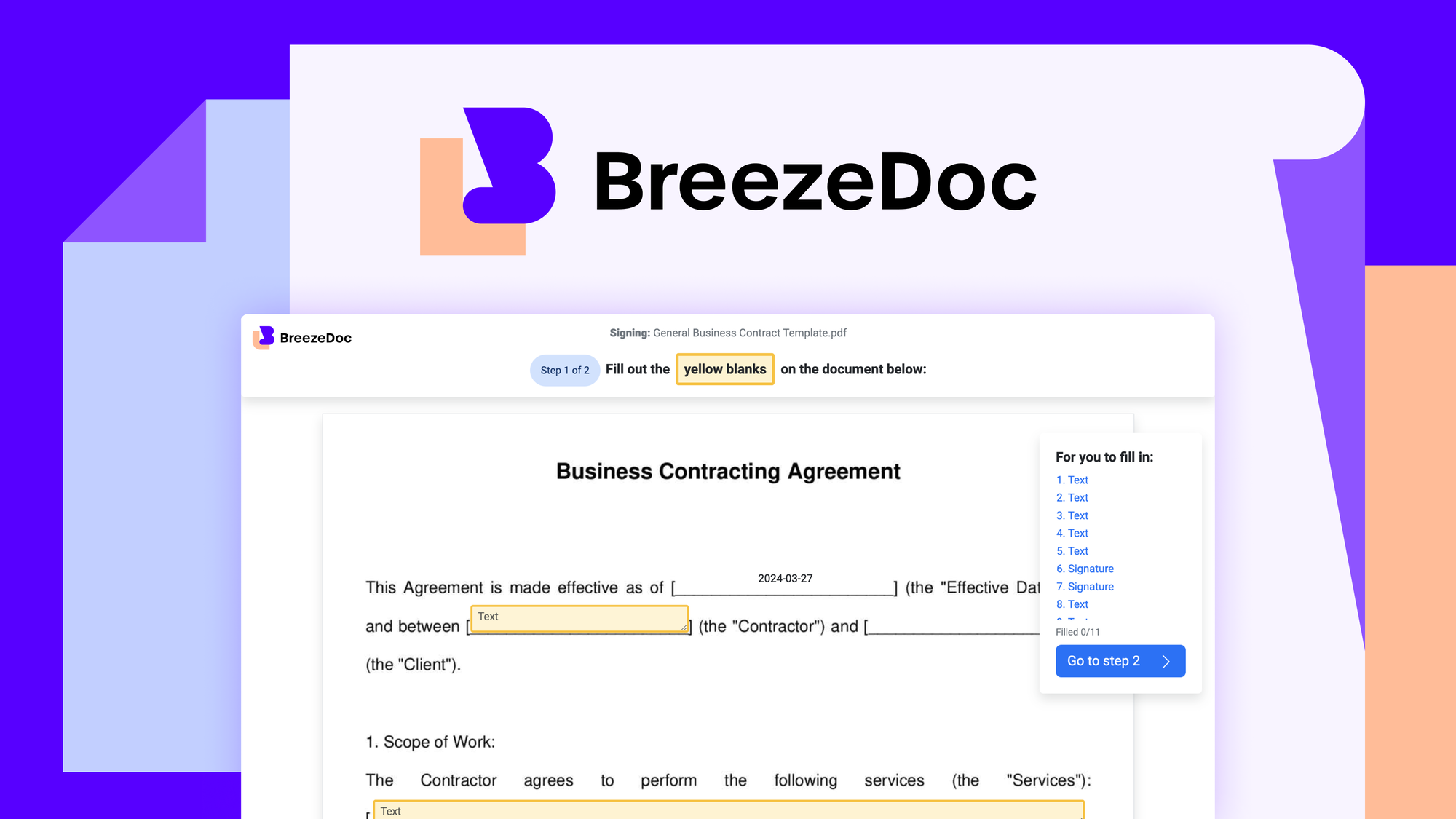
BreezeDocOperations Analysis
“E-signature users are desperate for a DocuSign alternative that isn't a buggy 'shareware' mess.”
Proceed Carefully
There may be an opening here, but the signal still needs external validation before you commit.
Proceed Carefully
There may be an opening here, but the signal still needs external validation before you commit.
Medium
Based on revenue, reviews, strategy fit, and visible downside signals in the current dataset.
Complaint-backed
This tells you how much of the current read is supported by strong in-platform evidence versus thin or ambiguous signal.
Check whether the complaints also repeat on Reddit, G2, or support-heavy communities.
Founders who can ship a cleaner UX or more reliable version of an already-proven workflow.
Teams chasing deep enterprise contracts or products that require long procurement cycles from day one.
Trust is the only currency in e-signatures. Any bug in the final PDF output will lead to immediate churn and potential legal liability for users.
Revenue and review volume suggest this market is real.
Complaints or weak ratings suggest users are not fully satisfied.
Pricing alone does not yet prove meaningful willingness to pay.
There may be a wedge here, but the competitive gap is still ambiguous.
Still needs off-platform confirmation from search demand, communities, or customer interviews.
“Small businesses and agencies are bleeding cash on DocuSign's $100+/year per-user pricing and want a one-time or low-cost 'set it and forget it' tool.”
Trust is the only currency in e-signatures. Any bug in the final PDF output will lead to immediate churn and potential legal liability for users.
The 4-Dimension Scorecard
$25k revenue proves there is a mid-market appetite for affordable e-signatures, but growth is stalled by poor execution.
A 3.81 rating with 130+ reviews is a massive opportunity. The incumbent is failing on basic utility (field alignment, API), making them extremely vulnerable to a polished clone.
Static document hosting and PDF manipulation have low COGS. No unsustainable 'Unlimited AI' nonsense here.
Competing against DocuSign/Adobe is hard, but the 'Indie' segment is wide open for a tool that simply works.
The Opportunity Radar
Deep Review Mining & Gap Analysis
Pain & Gaps
"Users need to post links for liability waivers or generic intake forms without sending individual emails."
"Power users want to automate document generation via Zapier/Pabbly but find the current integration non-functional."
"Multi-user permissions are missing, making it useless for growing agencies."
Niche Discovery
"Mention of 'liability waivers' and 'public links' suggests a need for high-volume, low-stakes signing."
"Multiple complaints about Zapier and API failures from 'Plus Users'."
Marketing Angle
The e-signature tool that doesn't look like a 1998 virus to your clients.
Use this angle to position your product against the generic competitors. Focus on the specific pain points identified in the "Pain & Gaps" module.
Counter-Signals
Reasons this opportunity may look better in the dataset than it will feel in the real market.
- Reliability is non-negotiable in legal docs. Users leave because the UI is 'clunky,' fields don't align correctly, and the API is essentially broken.
Sniper Verdict
“Listen to the hate. Build the cure. Steal the revenue.”
Execution Plan
“The current product is failing on basic physics—document fields don't stay where they are put. Build a high-fidelity, API-first e-signature tool that prioritizes the 'Signer Experience' to ensure users look professional.”
Build First
- High-Fidelity Drag-and-Drop Editor (Must be pixel-perfect)
- Public Signing URLs (For waivers/intake)
- Robust Zapier/Pabbly Integration (Focus on 'Document Signed' trigger)
Do Not Start With
- Complex Multi-Recipient Workflows (Keep it 1-2 signers for MVP)
- In-app Document Creation (Just stick to PDF uploads)